How to Reverse Blonde Hair Damage
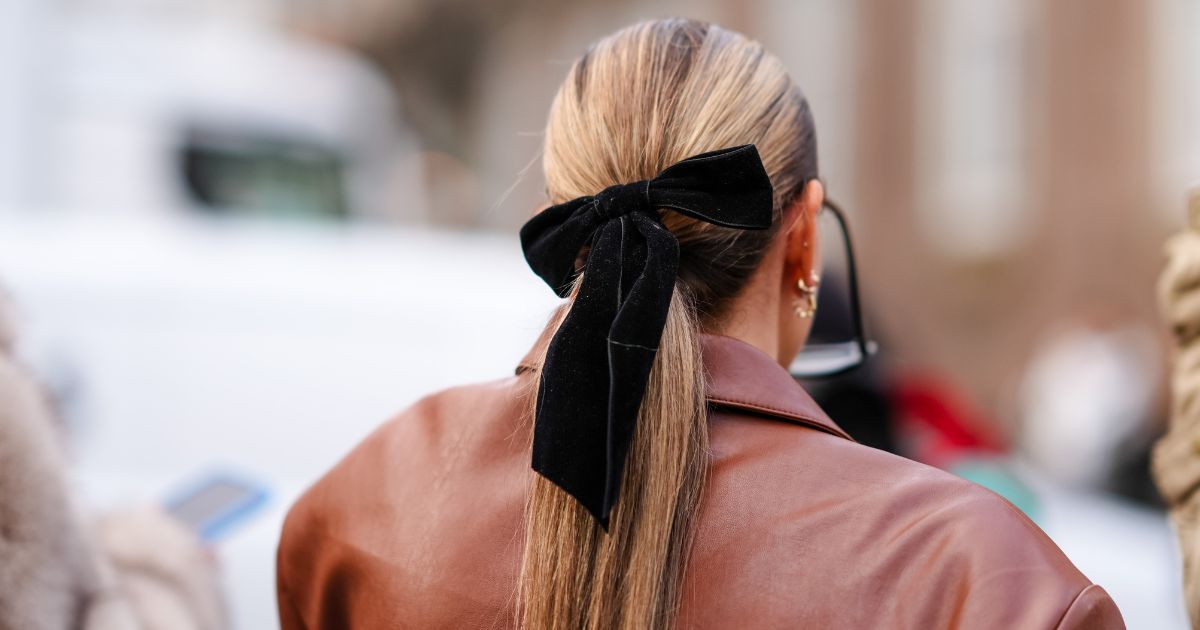
Blonde hair can look bright, glossy, and beautiful, but lightening also puts the hair under significant stress. Whether your hair is highlighted, fully bleached, or balayaged, repeated colour processing can weaken the strand, increase dryness, and make the hair more prone to breakage. If your blonde feels rough, fragile, or thinner than usual, you are likely dealing with blonde hair damage.
The good news is that while severe damage cannot be erased overnight, it can absolutely be improved with the right approach. New research in cosmetic science continues to show that a consistent repair routine is one of the most important factors in improving hair strength, softness, shine, and overall resilience over time. That means real blonde hair repair is not about one quick fix, but about using the right products regularly and protecting the hair from ongoing stress.
What Causes Blonde Hair Damage?
Blonde hair damage is most commonly caused by bleach, highlights, high-lift colour and heat styling. Bleach works by opening the cuticle and breaking down natural pigment, but that process also disrupts the protein structure of the hair. As a result, the hair becomes more porous, drier, and weaker.
Common signs of blonde hair damage include:
- dry or straw-like texture
- split ends and breakage
- dullness and lack of shine
- tangling more easily than before
- hair that feels stretchy or fragile when wet
This is why blonde hair often feels like it is getting thinner, even when it is still growing. The issue is usually not just growth, but breakage caused by bleach damage and dehydration.
Can You Reverse Blonde Hair Damage?
You can improve and visibly reverse many of the effects of blonde hair damage, especially when you focus on repair and breakage prevention early. While hair that is already heavily damaged cannot biologically “heal” in the same way skin can, it can be strengthened, softened, and protected so it looks and feels much healthier.
A good blonde hair repair routine helps by:
- replenishing lost moisture
- smoothing the cuticle
- reducing breakage
- improving softness and shine
- supporting healthier-looking regrowth
This is what most people really mean when they ask how to reverse bleach damage.
1. Restore Moisture First
One of the first things blonde hair loses after bleaching is moisture. Dryness makes the hair feel rough, causes tangling, and increases the chance of snapping when brushing or styling.
To improve blonde hair damage, focus on:
- weekly deep conditioning masks
- lightweight oils for softness
- hydrating, sulphate-free shampoos
- conditioners designed for bleached or highlighted hair
This helps restore flexibility to the strand, which is essential for reducing breakage.
2. Support Protein and Bond Repair
Bleach affects the internal structure of the hair, not just the surface. That is why blonde hair repair often needs more than a moisturising conditioner alone.
Bond-supporting and strengthening treatments can help improve the feel of damaged blonde hair by:
- reinforcing weakened areas
- improving resilience
- reducing snapping during washing and styling
- making hair feel stronger over time
The key is balance. Too much protein can leave hair stiff, while too little leaves it weak and over-softened. A consistent routine that combines moisture and strengthening care tends to give the best results.
3. Reduce Breakage to Retain Length
A lot of people think their blonde hair has stopped growing, when really it is breaking off at the ends. If you want to reverse bleach damage, reducing breakage is just as important as nourishing the hair.
Focus on simple habits that protect fragile blonde strands:
- detangle gently, especially when wet
- use a microfibre towel or soft cotton T-shirt
- avoid excessive heat styling
- use heat protection every time
- sleep on a silk or satin pillowcase
These small changes can make a noticeable difference in your overall blonde hair repair results.
4. Keep Your Blonde Routine Colour-Safe
Blonde hair needs repair, but it also needs protection from brassiness, dullness, and colour fade. Heavy or unsuitable products can sometimes leave blonde hair looking flat or warm-toned.
Look for products that support:
- moisture without heaviness
- shine without greasiness
- nourishment without colour fade
- blonde-safe ingredients for highlighted, bleached, or balayage hair
This makes your repair routine much more effective, because healthy-looking blonde hair is not just stronger — it also looks brighter and cleaner in tone.
5. Follow a Consistent Blonde Hair Repair Routine
New research and modern trichology guidance increasingly point to the same thing: consistency is what delivers visible hair repair over time. One treatment used occasionally will not do the same job as a steady routine followed week after week.
A simple repair routine may include:
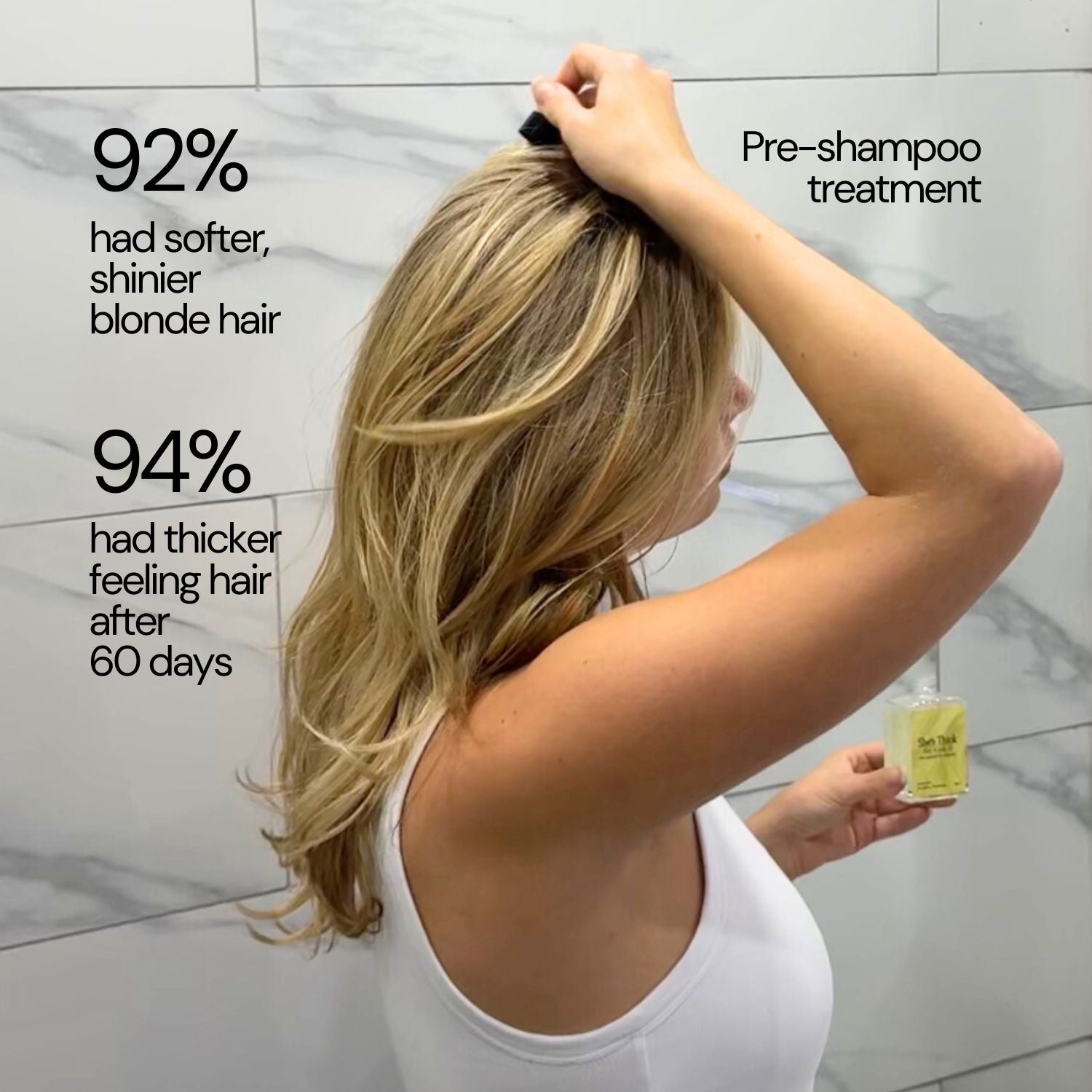
- a pre-wash scalp or hair oil before wash day
- a nourishing blonde-safe shampoo and conditioner
- a weekly repair mask
- bond-supporting treatment as needed
- regular protection from heat and mechanical stress
Over several weeks, this kind of routine helps improve softness, shine, manageability, and the overall appearance of blonde hair damage.
Final Thoughts: How to Reverse Blonde Hair Damage
If you are wondering how to reverse blonde hair damage, the answer is not a harsh reset or a single hero product. It is a consistent routine that repairs dryness, supports the hair structure, reduces breakage, and protects your blonde from further stress. Over time, that is what creates healthier, softer, stronger-looking hair.
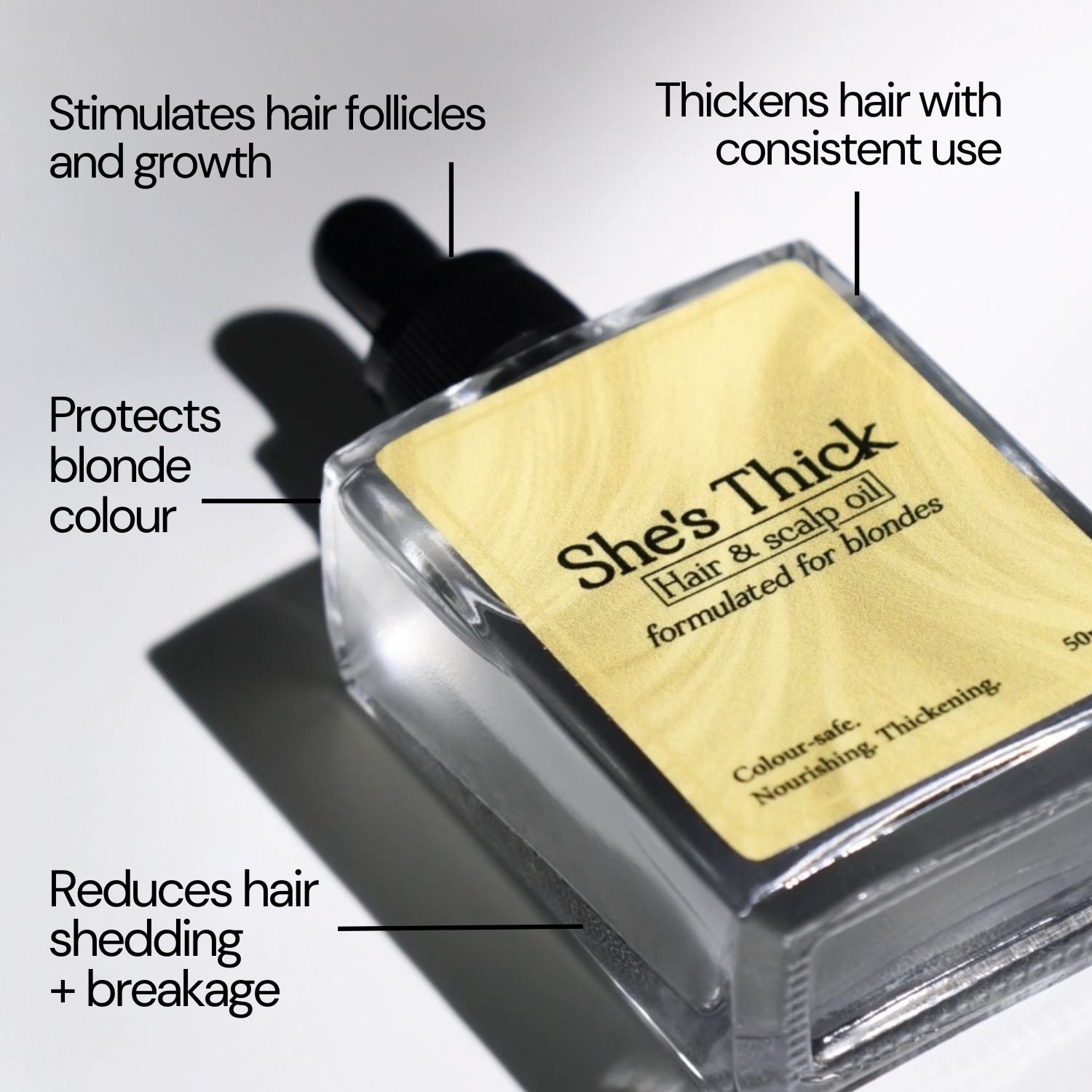
For anyone looking for a blonde-safe treatment to support this process, She’s Thick is designed for highlighted, bleached, and balayage hair. Used consistently as part of a repair routine, it helps nourish the scalp and hair without compromising blonde colour, making it a simple addition to a more effective blonde hair repair routine.