How to Reduce Hair Thinning During Menopause: A Guide for Blondes Seeking Stronger, Fuller Hair

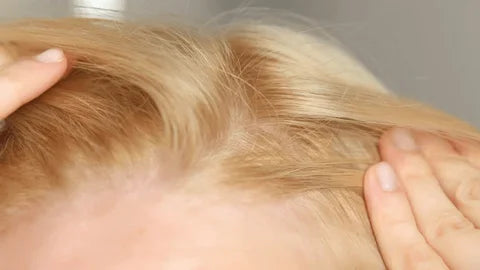
Menopause can bring some of the most dramatic hair changes a woman experiences. Falling oestrogen levels, higher androgen sensitivity and slower cell turnover can all contribute to hair thinning, reduced density and changes in texture. For dyed blonde hair — whose hair is naturally finer — these shifts can feel even more noticeable.
The good news? Targeted care, research-backed nutrients and organic hair growth treatments can help restore volume and support healthy blonde hair growth during this transitional stage.
1. Nourish hair from the inside with growth-supporting nutrients
During menopause, the hair growth cycle becomes shorter — meaning strands spend less time growing and more time shedding. Strategic nutrients can help counterbalance this.
A 2023 review in Dermato-Endocrinology reported that vitamin D, omega-3 fatty acids, and biotin significantly support follicle strength and density in women experiencing hormonal hair thinning. Another 2022 study from the Journal of Cosmetic Dermatology found that postmenopausal women supplementing with marine collagen peptides experienced improved hair volume and reduced fallout within 90 days.
Top nutrients to support hair growth include:
- Biotin & B-complex vitamins – support keratin production.
- Vitamin D3 – reduces thinning associated with hormonal imbalance.
- Omega-3s – reduce inflammation and nourish follicles.
- Marine collagen – strengthens strands at the root.
These nutrients work synergistically to promote thicker, fuller hair as hormone levels shift.
2. Improve scalp circulation to activate dormant follicles
Healthy hair growth relies on strong scalp microcirculation. With hormonal changes, follicles can become under-stimulated — leading to shedding and less regrowth.
A 2022 study published in Integrative Medicine Reports found that consistent scalp massages improved hair thickness by enhancing blood flow and follicular activity.
To enhance circulation:
- Massage the scalp for 5 minutes daily using gentle, circular motions.
- Use tools like a soft silicone scalp brush.
- Pair massage with a lightweight, organic growth oil to support follicle health.
This simple routine can measurably reduce hair thinning over time.
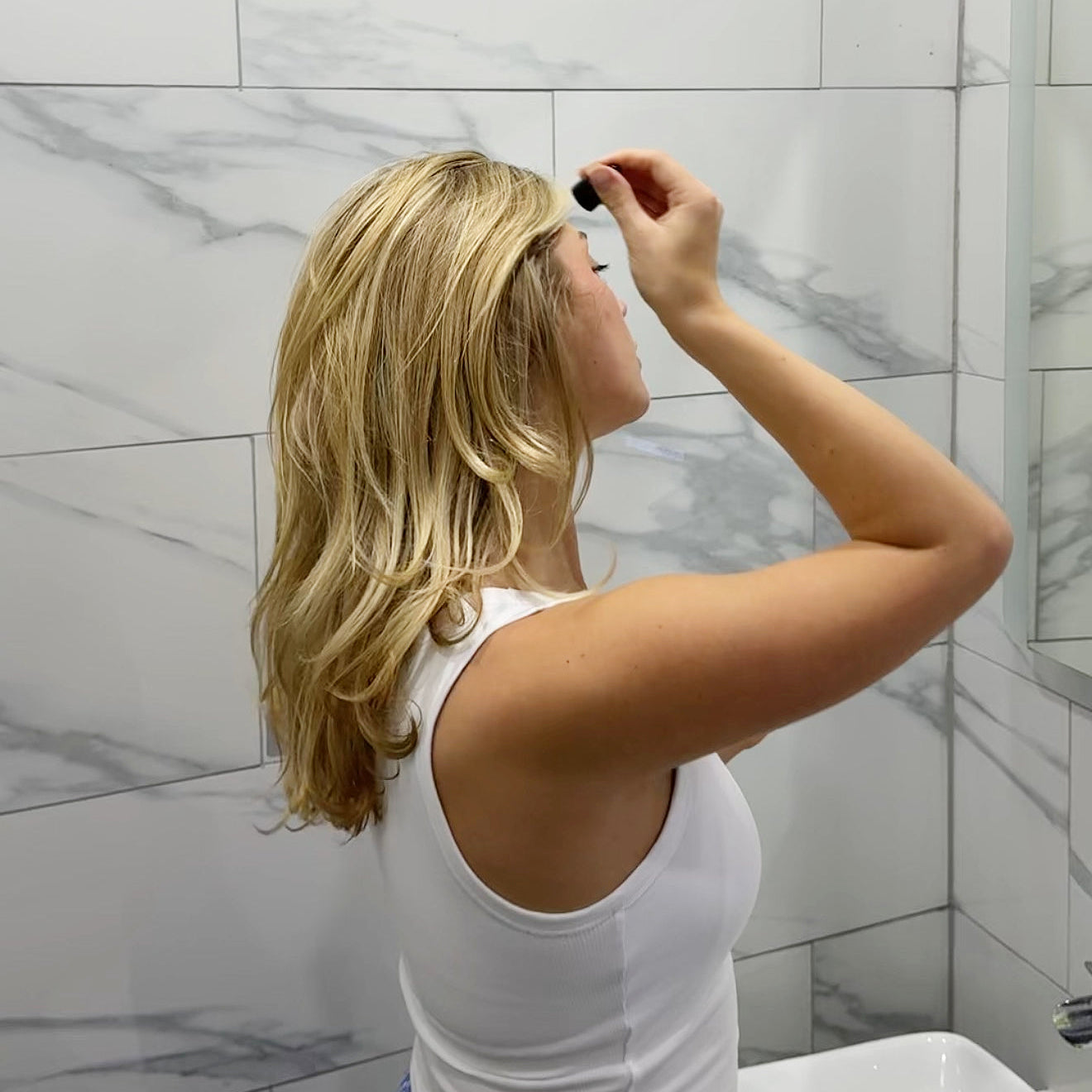
3. Strengthen fragile menopausal hair with She’s Thick — an organic, blonde-safe formula
Hormonal fluctuations can make blonde hair feel even finer, weaker and more prone to breakage. That’s where She’s Thick, our pre-shampoo organic hair growth treatment, becomes transformative.
The plant-powered formula supports:
- Thicker, fuller strands.
- Stronger roots and reduced breakage.
- Improved scalp health.
- Brighter blonde tones, without colour fade.
Its lightweight consistency is ideal for fine or chemically-lightened hair, and it absorbs quickly to nourish both roots and lengths. Consistent use helps reinforce menopausal hair from the inside out — giving it a fuller, more resilient appearance.
4. Reduce damage by avoiding heat and harsh chemical treatments
Heat styling and frequent colouring can weaken already fragile menopausal hair. Over time, this damage makes thinning appear worse.
To keep blonde hair stronger:
- Limit hot tools to 1–2 times per week.
- Use a heat protectant every single time.
- Space out lightening or bleaching appointments.
- Embrace low-maintenance blonde techniques like babylights or balayage.
Menopausal hair thinning is common — but with the right nutrition, scalp stimulation and organic strengthening treatments like She’s Thick, you can restore volume, reduce shedding and keep your blonde hair looking full and radiant. Supporting your scalp, nourishing follicles and avoiding unnecessary damage will help your hair thrive through every stage of menopause.